Construction & Trades Management

Lead the crews that build tomorrow
Start Building
Your Future
"*" indicates required fields
Train for a Construction & Trades Management Career — Learn Project Scheduling, Estimating, and Crew Leadership
Hands-on construction management training in Glendale designed to prepare you for roles in the construction industry.

Graduate in as little as 18 months
Prepare for NCCER-recognized credentials
Learn construction scheduling, workforce planning & project management
Get career placement support for Phoenix-area employers
Curriculum Details
Arizona Automotive Institute’s comprehensive Construction & Trades Management program prepares you for positions in the construction industry. We combine classroom-style education with hands-on learning to prepare you for what a career in project management will be like once you graduate. With enrollment starting on a rolling basis and programs that can be completed in 18 months, your dream career is in your near future! By the end of our program, you should receive an Associate of Applied Science in Construction & Trades Management.*
Associate of Applied Science: 92 Credit Hours, 18 Months.
*AAI does not guarantee third-party certifications. Certification requirements for taking and passing certification examinations are not controlled by AAI but by outside agencies and are subject to change by the agencies without notice to AAI. Therefore, AAI cannot guarantee that graduates will be eligible to take certification examinations, regardless of their eligibility status upon enrollment.
Skills You Can Learn in Our Construction and Trades Management Program
Learn how to plan, organize, and manage construction projects from start to finish, including estimating, budgeting, and workflow coordination.
Learn how to create and manage construction schedules, allocate labor and materials efficiently, and keep projects on track using tools commonly used in the field.
Learn to inspect, diagnose, and repair manual and automatic transmissions, including clutches, CV joints, and AWD/4WD systems.
Train to accurately estimate labor, materials, and overhead costs to ensure competitive bidding and effective project budgeting.
Develop digital skills for managing construction office workflows, including communication platforms, cloud collaboration tools, and file management systems.
Learn to apply economic concepts to real-world construction scenarios, helping you make better decisions about resource use and project prioritization
How to Become a Construction Project Manager
Construction project management requires specific education and skills. Most project managers are required to earn a degree before they can begin their work. Depending on the industry or field you choose to work in, there are several avenues for education. Many people start with an associate’s degree, such as the Associate of Applied Science in Construction and Trades Management from Arizona Automotive Institute. Others choose to further their education and complete a bachelor’s or even master’s level degree in construction management or trades management. There is a significant amount of continued education required once your career as a construction project manager has begun. These courses often focus on developing skills and a deeper level of understanding in areas such as code compliance, safety measures, accident prevention, and estimating costs. Project management requires skills that go beyond construction and trade knowledge. Highly qualified construction project managers can lead their teams, ensure projects are completed on time, and maintain strong relationships with clients. Leadership skills are essential to being successful as a project manager. A good leader can recognize and utilize the strengths of their workers, communicate effectively with staff and clients, develop a working knowledge of the latest methods and technologies available, and present new ideas that may help their business continue to grow.
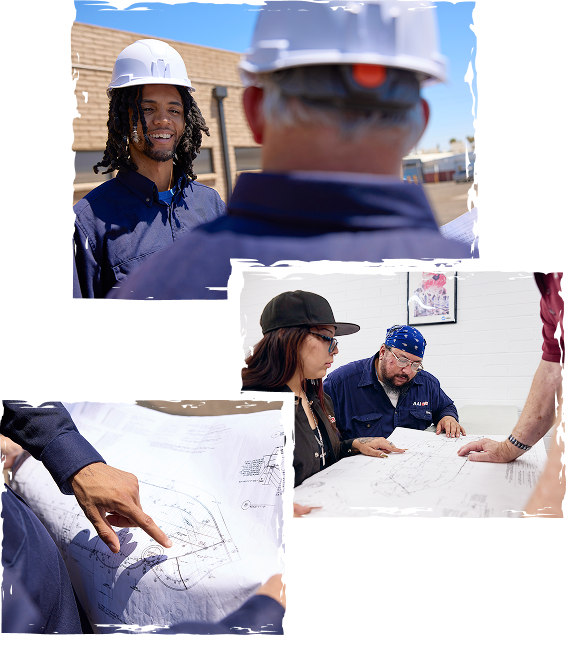
What Does a Construction Project Manager Do?
One of the most important things to complete a construction project successfully is strong, reliable leadership. For most construction projects, this responsibility falls on the construction project manager. If you are considering a career in construction project management or trades management, you may be wondering, “What do project managers do?”
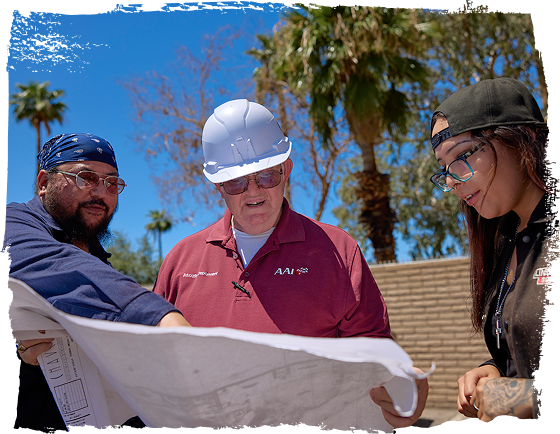
Construction managers oversee a project from beginning to end and work to ensure that everything is handled safely, efficiently, and professionally. These leaders are often responsible for making sure that each project is completed on time, meets all of the safety and health requirements, and stays within budget. Project managers are an essential part of every construction project.
Project Manager
-
 Project Managers work under the supervision of a Construction Manager to manage industry-related projects and tasks. They usually have the satisfaction of seeing a job through from start to finish. Their Qualifications include both formal education and in- formal training, and their knowledge encompasses construction materials and methods, mathematics, communications, safety, human resources, scheduling, and customer service, among other areas.*
Project Manager Daily Duties
-
Meet with owners
-
Examine a work breakdown structure (WBS)
-
Negotiate with subcontractors
-
Directly supervise crews
Career Opportunities for Construction Management Graduates

Graduates of our program may find work* as:
- HVACC
- Instructor
- Journeyman Electrician
*Arizona Automotive Institute cannot guarantee employment or salary. The jobs mentioned are examples of certain potential jobs, not a representation that these outcomes are more probable than others.
High-Demand Skills. Real-World Training.
Launch Your Career in Construction & Trades Management Today
Frequently Asked Questions
AAI’s program teaches project planning, budgeting, scheduling, resource coordination, and construction software use, preparing you for management roles in the trades.
To enroll in our Construction and Trades Management program, you’ll need to also enroll in one of the following programs:
- Combination Welding
- Electrical
- Heating, Ventilation, Air Conditioning, and Basic Refrigeration
It takes 18 months to complete our program.
At AAI, we only offer an in-person option for our Construction and Trades Management program.
You can learn to lead construction projects from start to finish—including planning, estimating, scheduling, and budgeting. You’ll also develop technical office skills like spreadsheet use and construction documentation.
No experience is required. AAI’s program teaches the fundamentals of project management, scheduling, cost estimating, safety, and crew leadership from the ground up.
Phoenix area construction managers earn a median annual wage of about $97,074 according to Indeed as of November 2025**. Earnings vary by experience, project size, NCCER credentials, and employer.
AAI’s program can be completed in 18 months, and many graduates begin pursuing assistant project manager, estimator, or site coordinator roles shortly afterward**.
**AAI does not guarantee employment or salary.
What is NCCER?
The National Center for Construction Education and Research (NCCER), created in 1996, is a not-for-profit 501(c)(3) education foundation. NCCER was developed with the support of more than 125 construction CEOs, and various association and academic leaders to create a standardized training and credentialing program for the construction industry.
Why is NCCER important to you?
Earning NCCER’s industry-recognized credentials means you, having undergone approved training, and have met the standards set by the NCCER. Your universally recognized credentials in your craft represent a national portability of your skills.
Additionally, NCCER manages credentialing and certification through its Registry System, which assists craft trainees and professionals by maintaining their records in a secure database.
NCCER also drives multiple initiatives to enhance career development and recruitment efforts for the industry, primarily through its Build Your Future initiative.
Why is NCCER important to employers?
Many organizations and companies track the qualifications of their craft professionals and possible new hires through NCCER’s Registry System. Those with NCCER credentials may be more desirable to potential employers.