Combination
Welding

Forge your future with in-demand skills
Start Building
Your Future
"*" indicates required fields
Shape Your Future in Welding in Just 10 Months — Get the Skills to Start Your Career Fast.
Hands-on construction management training in Glendale designed to prepare you for roles in the construction industry.

Tuition Assistance Available
Prepare for NCCER credentials that employers recognize nationwide
Get job placement support to connect with Phoenix-area employers
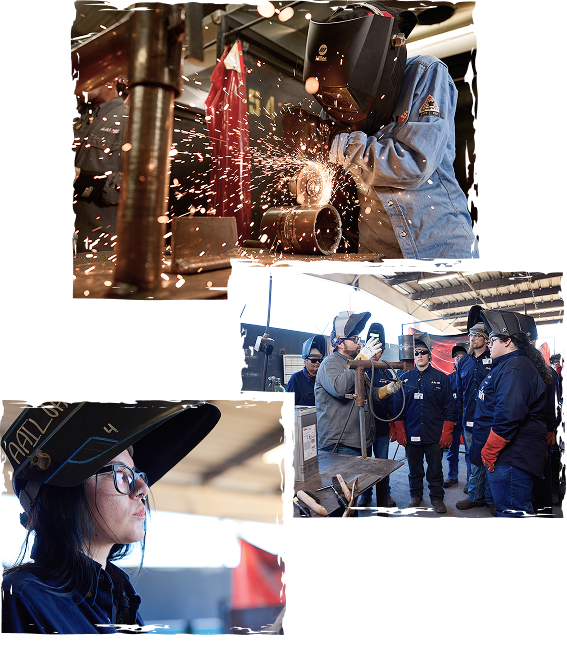
Learn hands-on in real shop settings, not just the classroom
Curriculum Details
Arizona Automotive Institute’s comprehensive Combination Welding program prepares you for positions in the welding industry. We combine classroom-style education with hands-on learning to prepare you for what a career in combination welding will be like once you graduate. With enrollment starting on a rolling basis and programs that can be completed in 10 months, your dream career is in your near future! By the end of our program, you should be prepared to take welding certification exams meeting the National Center for Construction Education & Research (NCCER) standards.*
Diploma: 56.5 Credit Hours, 10 Months.
Financial aid available for those who qualify
*AAI does not guarantee third-party certifications. Certification requirements for taking and passing certification examinations are not controlled by AAI but by outside agencies and are subject to change by the agencies without notice to AAI. Therefore, AAI cannot guarantee that graduates will be eligible to take certification examinations, regardless of their eligibility status upon enrollment.
WHAT YOU’LL LEARN
- Shielded Metal Arc Welding
- Gas Metal Arc Welding
- Gas Tungsten Arc Welding
- Flux-cored Arc Welding
- Plasma Arc Cutting
- Welding Repairs
- Cleaning Welds
- Part Fabrication
What Does a Welder Do?
If you enjoy working with your hands to create products designed to help others, you may want to consider a career in welding. But what do welders do? Welders are an essential part of many industries, and the process of becoming a combination welder is fairly simple. To become a welder, you will need at least a high school diploma (or GED certificate) and specific training in welding. Most businesses and industries require welders to attend a vocational school and/or complete an apprenticeship before beginning their welding career.
There is considerable training that may be required to become a welder because some aspects of the work can be dangerous. Most welders work full-time and gain valuable experience from early on in their careers . If you are interested in a career in combination welding, then AAI can help you attain the skills to start your career. .
To be a successful welder, you may need to be able to study and interpret blueprints in order to create a product that fits the exact specifications for the project. Welders should also develop an understanding of how to use and maintain specific machinery and tools in order to maintain a safe working environment, such as torches, saws and clamps. This helps ensure that their work is done correctly and efficiently.
Welders are trained to safely use various torches, like stick welders or TIG welders, depending on the project at hand. Safety training is important because the equipment used to complete the work can cause serious harm if mishandled.
*AAI cannot guarantee employment or salary.
Preparation Duties
-
 Reading and following specific blueprints
-
Determining the required equipment
-
Selecting the necessary welding method
-
Preparing materials to meet project requirements
-
Ensuring workplace safety and a safe working area
Welding Duties
-
Chipping and cleaning completed welds
-
Repairing welds
-
Creating machine parts, equipment, and motors
-
Filling holes, indentations, and seams
-
Welding a number of materials, such as: plates, pipes, carbon & low alloy steel pipe, aluminum pipe and plates
What Is Welding?
Welding is the process of joining several pieces of material together, usually metal or thermoplastics, using extreme heat. Most welding falls into one of two categories: arc welding and torch welding. From there, additional sub-types of welding exist in order to fabricate products or pieces of a project. This type of work may require a very specific skill set that benefits a variety of industries.
Types of Welding Industries and Careers
Welders use their skills in a variety of industries for many different jobs. Some of the more common fields are construction, manufacturing of automobiles, planes and ships, and maintenance in industrial settings. Other industries that also benefit from the skills of a welder are the various types of electrical manufacturing, paper mills, infrastructure, and natural gas. Above and beyond that, welders can also use their skills to create custom pieces and art.
If you are interested in welding, Arizona Automotive Institute can help you develop your skills both in the classroom and with hands-on experience. Our combination welding program can prepare you to meet the welding certifications. Get started on your welding education at AAI.
Career Outlook for Welding Graduates

The outlook for welders, solderers, and brazers is projected to slow a bit between 2023 and 2033. Despite this, around 45,800 openings will be available each year nationwide should projections hold.
Graduates of our program may find work* as:
- Welders
- Fabrication Welders
- Finishers
- Pipe Fitters
- Assistant
- HVAC Technicians
*Arizona Automotive Institute cannot guarantee employment or salary. The jobs mentioned are examples of certain potential jobs, not a representation that these outcomes are more probable than others.
High-Demand Skills. Real-World Training.
Launch Your Career in Combination Welding Today
Frequently Asked Questions
According to the U.S. Bureau of Labor Statistics, welders, cutters, solderers, and brazers earn a median annual wage of around $48,940 (as of 2024). Many welders in the Phoenix area earn competitive pay based on skill level, certifications, and industry demand. With additional experience and certifications, welders can move into specialized roles that offer even higher earning potential.
AAI’s Combination Welding program can be completed in as little as 10 months. Once you graduate, our Career Services team provides job placement support to help connect you with employers in the Phoenix area and beyond. Many students are able to begin pursuing entry-level welding positions shortly after completing the program and earning NCCER certification.
Welding training programs vary in length. Certificate programs can range from a few weeks to several months, while associate degrees typically take about two years to complete. The duration depends on the program’s depth and the welding processes covered.
Our Combination Welding program can prepare students for industry-recognized certifications, such as those offered by the American Welding Society (AWS). We also expose students to National Center for Construction Education and Research NCCER) credentials. Despite this, we cannot, and do not, guarantee students or graduates will receive third-party certifications.
No experience is required. AAI’s Combination Welding program is ideal for beginners and covers fundamental techniques and safety standards from day one.
Our program covers various processes, including Shielded Metal Arc Welding (SMAW), Gas Metal Arc Welding (GMAW/MIG), Flux-Cored Arc Welding (FCAW), and Gas Tungsten Arc Welding (GTAW/TIG).
Welding students can train with a range of professional equipment, including SMAW, GMAW, FCAW, and GTAW machines, plasma cutters, oxy-fuel torches, grinders, and PPE. You can also learn how to read welding symbols, blueprints, and use layout and measuring tools essential to the trade.
What is NCCER?
The National Center for Construction Education and Research (NCCER), created in 1996, is a not-for-profit 501(c)(3) education foundation. NCCER was developed with the support of more than 125 construction CEOs, and various association and academic leaders to create a standardized training and credentialing program for the construction industry.
Why is NCCER important to you?
Earning NCCER’s industry-recognized credentials means you, having undergone approved training, and have met the standards set by the NCCER. Your universally recognized credentials in your craft represent a national portability of your skills.
Additionally, NCCER manages credentialing and certification through its Registry System, which assists craft trainees and professionals by maintaining their records in a secure database.
NCCER also drives multiple initiatives to enhance career development and recruitment efforts for the industry, primarily through its Build Your Future initiative.
Why is NCCER important to employers?
Many organizations and companies track the qualifications of their craft professionals and possible new hires through NCCER’s Registry System. Those with NCCER credentials may be more desirable to potential employers.
Ready to Take the First Step?
Start earning your way to the career training you have been dreaming of with our hands-on programs at Arizona Automotive Institute. Centrally located within the Phoenix Metropolitan area, AAI is the perfect place to begin your journey in skills-based careers. Learn more about our programs or schedule a tour to visit our innovative learning labs and campus today.